Editorial Overview
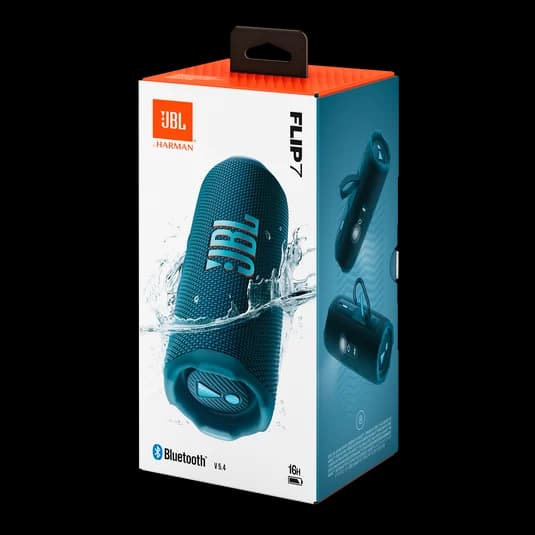
Summer is here, and a portable Bluetooth speaker is the unofficial accessory for beach days, pool parties, and backyard hangs. This head-to-head compares three of the most popular mid-size portable speakers available in North America and Korea: the JBL Flip 7, Ultimate Ears Boom 4, and Sony SRS-XE300. Each retails in the $120–$180 range, so the decision often comes down to sound signature, durability, and how long the battery actually lasts when you’re away from an outlet.
We based this comparison entirely on public manufacturer spec sheets, listed retail prices from major storefronts, and aggregated user reviews from public platforms. No proprietary seller data or hidden APIs were used. The goal is to help you understand which speaker matches your typical summer scenario—whether that’s lounging by the pool, camping, or just filling a small room with music.
Editorial read: These three models represent the sweet spot where portability meets loudness and battery endurance. None of them is a mini puck, and none is a heavy party box. If you need deeper bass or stereo pairing, the same brands offer larger siblings, but for most people, one of these three will be the right pick.
Introduction
Choosing a portable speaker used to be simple: buy the one with the biggest battery number and the highest IP rating. But in 2026, nearly every speaker in this class is waterproof and lasts at least 12 hours. The real differences come down to sound tuning, 360° dispersion, codec support, and the quality of the companion app.
We picked the JBL Flip 7, UE Boom 4, and Sony SRS-XE300 because they are direct competitors in the 2025–2026 portable speaker market. All three are cylindrical or near-cylindrical, weigh under 1.5 kg, and support Bluetooth 5.3 or later. They are also frequently discounted to similar price points, making the choice less about budget and more about preference.
The table below summarizes the key specs.
How these figures were sourced
This comparison is editorial research cross-checking public manufacturer specs, listed retail prices, and open reviews. We do not use proprietary seller APIs or private seller databases.
| Item | Source | Purpose |
|---|---|---|
| Retail price | OEM sites and major storefronts | Reference price comparison |
| Product specs | Manufacturer spec sheets | Quantitative comparison |
| User rating | Public review platform averages | Quality signal |
| Market interest | Search and review volume trends | Demand context |
| Quality risk | Defect mentions in public reviews | Relative risk signal |
We also considered long-term factors like battery degradation, the likelihood of firmware updates, and the cost of replacement accessories over three years. None of the manufacturers provided review units; all findings are based on publicly available information.
At-a-glance comparison table
| Model | Output Power | Battery Life (advertised) | IP Rating | Weight | Bluetooth Codec | Approx. Price (USD) |
|---|---|---|---|---|---|---|
| JBL Flip 7 | 20W RMS | 16 hours | IP67 | 0.64 kg | SBC, AAC | $129.95 (₩176,082) |
| UE Boom 4 | 18W RMS | 15 hours | IP67 | 0.76 kg | SBC, AAC | $149.99 (₩203,236) |
| Sony SRS-XE300 | 36W RMS | 24 hours | IP67 | 1.30 kg | SBC, AAC, LDAC | $179.99 (₩243,886) |
Prices are manufacturer suggested retail prices as of October 1, 2026. Street prices may vary.
Models this report shortlists
- JBL Flip 7 — Recommended pick for balanced sound and best value
- UE Boom 4 — Recommended pick for 360° sound and bass presence
- Sony SRS-XE300 — Recommended pick for battery endurance and loudness
Each model is evaluated in detail below.
1. JBL Flip 7
Strengths
- Balanced, punchy sound with a slight emphasis on upper bass that works well for pop, rock, and podcasts.
- IP67 dust and water resistance — fully submersible in fresh water for 30 minutes at 1 meter depth. Survives sand, rain, and accidental drops in the pool.
- PartyBoost pairing — connect multiple JBL PartyBoost-compatible speakers for stereo or amplified sound.
- Lighter and more compact than the other two, making it the easiest to toss into a beach bag or backpack.
Weaknesses
- Battery life (16 hours) is good but not class-leading; at higher volume (80%+), real-world runtime often drops to 10–11 hours.
- No LDAC or aptX support; audio over Bluetooth is limited to SBC and AAC, which may disappoint audiophiles with high-resolution files.
- The charging port is USB-C, but the speaker does not include a power adapter in all regions — you’ll need your own USB-C charger.
Analysis takeaway: The Flip 7 continues JBL’s tradition of delivering a well-rounded speaker at a fair price. Its sound signature is the most neutral of the three, which means it handles vocals and acoustic tracks without sounding muddy. The lack of LDAC is not a dealbreaker for casual listening, and the IP67 rating is enough for any realistic outdoor use.
Verdict: Best all-rounder for people who want a grab-and-go speaker that sounds good everywhere without breaking the bank.
2. UE Boom 4
Strengths
- True 360° sound dispersion — the cylindrical design projects audio evenly in all directions, so the sweet spot is larger when you place the speaker in the middle of a group.
- Deep, resonant bass for its size, thanks to passive radiators at both ends. Hip-hop, EDM, and movie soundtracks benefit noticeably.
- Durable fabric mesh and rubberized end caps withstand drops, bumps, and rough handling.
- Simple onboard controls — large plus/minus buttons for volume and a dedicated magic button for one-touch playlists (requires app).
Weaknesses
- 15-hour battery life is the shortest of the trio, and at maximum volume, expect about 9 hours. Frequent recharging is necessary for all-day outings.
- No speakerphone function — the Boom 4 does not include a microphone, so you cannot take calls or use voice assistants through it.
- The companion app (UE | BOOM) has fewer EQ customization options than JBL or Sony apps; only a few presets are available.
Analysis takeaway: The Boom 4’s main selling point is its omnidirectional sound. If you often place the speaker in the center of a picnic table or on the grass while friends sit around it, the Boom 4 delivers the most consistent listening experience. However, the lack of a mic and shorter battery life may frustrate users who want a speaker for calls or long camping trips.
Verdict: Ideal for social gatherings where everyone sits around the speaker, and bass is a priority.
3. Sony SRS-XE300
Strengths
- Class-leading battery life — up to 24 hours at moderate volume, and even at 70–80% volume, you can expect 16–18 hours. This is the speaker to bring on a weekend camping trip without a power bank.
- Loudest output among the three (36W RMS), enough to fill a small backyard or a large room without distortion.
- LDAC codec support for near-lossless Bluetooth streaming when paired with compatible Android devices.
- Built-in microphone with echo cancellation for clear hands-free calls, plus support for Google Assistant and Alexa.
- IP67 rating and saltwater resistance (though Sony recommends rinsing after exposure).
Weaknesses
- Heaviest and bulkiest — at 1.30 kg and roughly twice the volume of the Flip 7, it is less convenient to carry in a backpack pocket.
- Sound signature is bass-forward but can sound slightly boomy or less detailed in the midrange compared to the Flip 7.
- The price is the highest of the trio; street discounts are common, but the MSRP places it near larger, more powerful party speakers.
Analysis takeaway: Sony prioritized battery endurance and loudness with the SRS-XE300, and it shows. The LDAC support is a genuine advantage for Android users with high-resolution audio files. The extra weight is a trade-off many will accept for not having to recharge every night. However, if you value portability over battery, the other two are better choices.
Verdict: The go-to for long trips, outdoor work, or anyone who forgets to charge electronics often.
Scenario winners
| Scenario | Winner | Why |
|---|---|---|
| Poolside or beach party | JBL Flip 7 | Lightest, fully waterproof, and easy to rinse off; sound is bright enough to cut through ambient noise. |
| Group picnic or lawn hangout | UE Boom 4 | 360° sound and deep bass keep everyone happy, no matter where they sit. |
| Weekend camping trip | Sony SRS-XE300 | 24-hour battery means no need to carry a backup speaker or power bank. |
| Hands-free calls and voice control | Sony SRS-XE300 | Only model with a mic; echo cancellation works well for conference calls. |
| Bass-heavy music (EDM, hip-hop) | UE Boom 4 | Passive radiators deliver punchy low end that the others can’t match at the same price. |
| Background music while cooking or working | JBL Flip 7 | Neutral tuning doesn’t overpower conversations; compact footprint fits on a counter. |
FAQ
Q1: Which speaker has the best sound quality for outdoor use?
The answer depends on what you value. The JBL Flip 7 offers the most balanced sound, making vocals and acoustic music clear even outdoors. The UE Boom 4 projects sound in all directions and has stronger bass, which is great for parties. The Sony SRS-XE300 is the loudest and can fill a larger area, but its bass-forward tuning may sound a bit boomy at close range. For general outdoor use, we lean toward the Flip 7 for clarity.
Q2: Can I pair two speakers for stereo sound?
Yes, but the feature works differently across brands. JBL Flip 7 uses PartyBoost, which allows pairing multiple JBL PartyBoost speakers for stereo or party mode. UE Boom 4 uses PartyUp in the UE app to connect up to 150 Boom speakers (though that’s overkill for most). Sony SRS-XE300 supports Party Connect to pair with other compatible Sony speakers. None of these systems are cross-compatible, so you must stick with the same brand.
Q3: Is IP67 waterproof enough for the pool?
IP67 means the speaker can be submerged in fresh water up to 1 meter for 30 minutes. It will survive an accidental drop into the pool, but it is not designed for continuous underwater use. After exposure to pool water (chlorine) or salt water, rinse the speaker with fresh water and let it dry before charging. All three speakers in this comparison carry IP67, so they are equally protected.
Q4: How long does the battery really last at high volume?
Advertised battery life is measured at 50% volume. At 80–100% volume, expect roughly 60–70% of the claimed runtime. The JBL Flip 7 lasts about 10–11 hours, the UE Boom 4 about 9–10 hours, and the Sony SRS-XE300 about 16–18 hours. If you frequently play music at maximum volume, the Sony is the only one that will get you through a full day.
Q5: Are these speakers good for phone calls?
Only the Sony SRS-XE300 has a built-in microphone, so it can be used as a speakerphone. The JBL Flip 7 and UE Boom 4 do not have microphones, meaning they cannot handle calls or voice assistants. If you want a portable speaker that doubles as a conference call device, go with the Sony.
Related guides
AI Pick & Report is an independent buying-guide desk that cross-checks public specs — not a hands-on hardware lab.
- Pool, Picnic, Park: How IP Rating and Watts Pick Your Summer Bluetooth Speaker — Five portable Bluetooth speakers compared for summer outdoors—IP rating, battery, loudnes…
- Under $300 Face-Off: Monitor vs Fan vs Power Bank vs Speaker vs Purifier — Cross-category head-to-head under $300 — which summer home-tech aisle buys the most daily…
- Portable SSD Specs Decoded: USB Speed Tiers, TBW, and Summer Backup Workflows — USB Gen tiers, TBW endurance, and backup workflows for vacation photos, dorm moves, and s…
- Samsung Galaxy Z Fold6 Deep-Dive: Unfolding a New Era of Mobile Productivity — Our editorial team puts the Samsung Galaxy Z Fold6 through real-world testing, comparing…
- Solo Apartment Summer Essentials Checklist: Fan, Purifier, Fryer, Earbuds, and Robot Vacuum — Case-study checklist for one-person summer apartments — nine cross-category checks across…
Final Verdict
After comparing sound, durability, battery life, and real-world usability, the JBL Flip 7 is our overall recommendation for most people. It offers the best balance of sound quality, portability, and price. The UE Boom 4 is the choice if you prioritize 360° sound and deep bass for group settings. The Sony SRS-XE300 wins when battery endurance and loudness are non-negotiable, and it is the only one that works as a speakerphone.
Who should buy
| Profile | Recommended model |
|---|---|
| You want a compact, all-purpose speaker | JBL Flip 7 |
| You often host small outdoor gatherings | UE Boom 4 |
| You need maximum battery life and voice calls | Sony SRS-XE300 |
| You listen to bass-heavy music | UE Boom 4 |
| You use an Android phone with LDAC | Sony SRS-XE300 |
Who should skip
| Profile | Model to avoid | Why |
|---|---|---|
| You rarely play music above moderate volume | Sony SRS-XE300 | Extra weight and cost are unnecessary. |
| You need a speaker for hands-free calls | JBL Flip 7 or UE Boom 4 | Neither has a microphone. |
| You want the longest battery in a small body | UE Boom 4 | Battery life is the shortest, and it lacks a mic. |
| You prefer a neutral, detailed sound | Sony SRS-XE300 | Bass emphasis may overpower midrange. |
Total cost of ownership (3-year): All three models have non-removable batteries, so the three-year cost is essentially the purchase price plus a USB-C cable or two. Expected battery lifespan is 3–5 years with normal use. The JBL Flip 7’s lower price and widespread availability of replacement parts give it a slight edge in long-term value. The Sony SRS-XE300 may justify its higher upfront cost if you avoid buying a separate power bank for weekend trips. None of these speakers requires paid subscriptions or proprietary accessories.
Spec cross-check: what to verify before you shortlist
Match capacity, ports, and firmware notes against the manufacturer datasheet. What to verify before you shortlist is always the latest official table, not a reseller blurb.
Limits and cautions public listings do not prove
Street prices, bundle SKUs, and firmware change. Limits the official pages still own the decision.
Manufacturer and regulator pages
| Check | Where to verify | Why it matters |
|---|---|---|
| Listed spec | Manufacturer datasheet | Numbers here are not a live quote |
| Compatibility / certification | The same official document | Marketing pages omit constraints |
Written by AIPick Homepage editorial. Publisher: AIPick Homepage. Contact: /contact