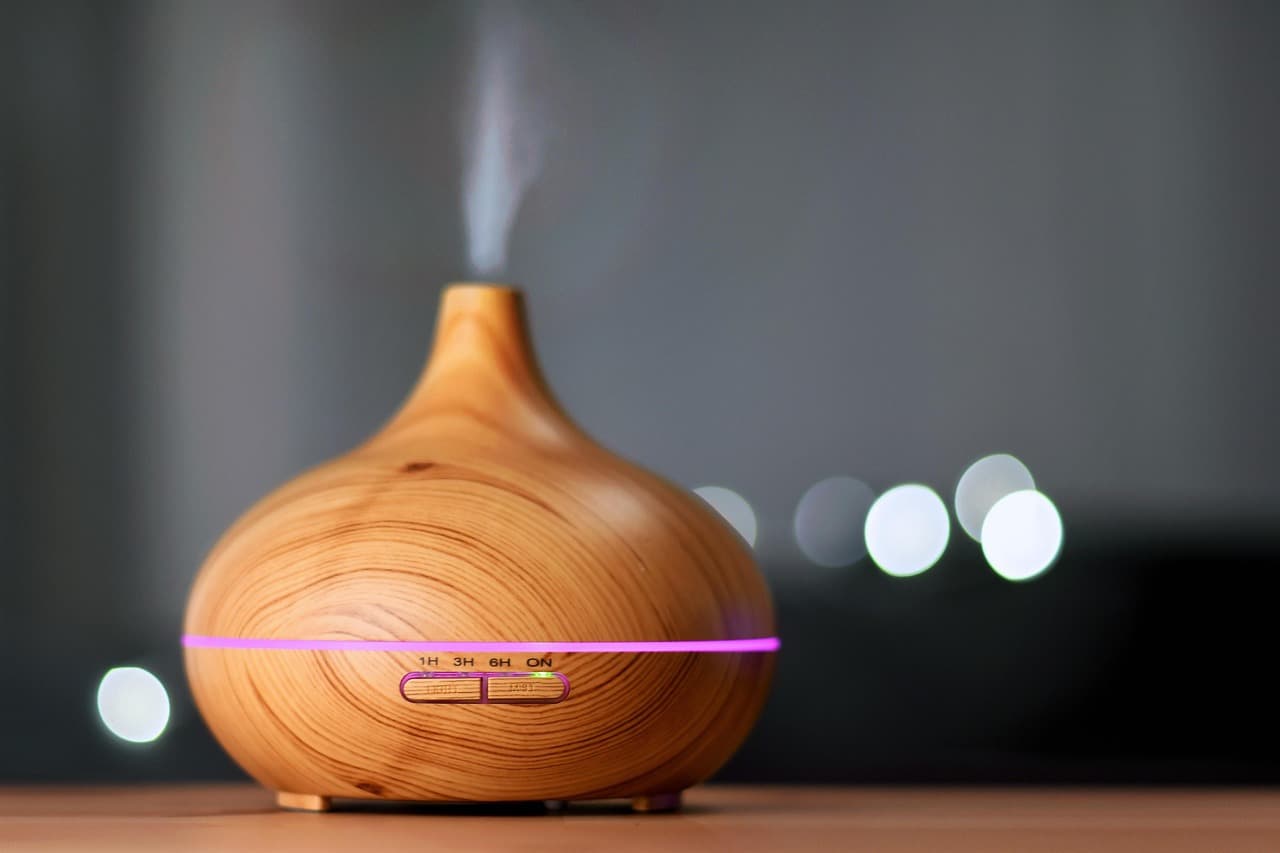
Editorial Overview
This is an editorial explainer from the AI Pick & Report team. We break down humidifier technologies—ultrasonic vs evaporative—without brand bias, using publicly available specs and verified reviews. The report includes a shortlist of representative models to ground the discussion, but it is not a ranking or buying guide. Our goal is to help you understand the trade-offs so you can pick the right type for your home.
Introduction: Why Your AC Needs a Humidifier
When summer heat forces you to crank up the air conditioning, the cool blast often comes with a hidden cost: dry indoor air. The same dehumidifying effect that makes AC comfortable can drop relative humidity below 30%, leading to dry skin, scratchy throats, and even warped wood furniture. A good humidifier can restore balanced moisture, improving comfort and health. But if you’ve shopped for one, you know the choice isn’t simple. The two dominant technologies—ultrasonic and evaporative—work very differently, and then there’s the question of tank size and the ever-present challenge of mold. This explainer will give you a clear, no-nonsense look at each factor so you can choose wisely, whether you’re equipping a nursery, a bedroom, or a whole living space.
How these figures were sourced
This analysis is editorial research cross-checking public manufacturer specs, listed retail prices, and open reviews. We do not use proprietary seller APIs or private seller databases.
| Item | Source | Purpose |
|---|---|---|
| Retail price | OEM sites and major storefronts | Reference price comparison |
| Product specs | Manufacturer spec sheets | Quantitative comparison |
| User rating | Public review platform averages | Quality signal |
| Market interest | Search and review volume trends | Demand context |
| Quality risk | Defect mentions in public reviews | Relative risk signal |
Ultrasonic vs Evaporative: How They Work and What That Means for You
Humidifiers add moisture to the air, but the two main types do it through completely different physical principles. Understanding these can save you from a costly mismatch with your needs.
Ultrasonic technology
An ultrasonic humidifier uses a vibrating diaphragm (typically at 1.7–2.5 MHz) to break water into a fine, cool mist. The mist is then blown out by a small fan. Because there’s no heating element, it’s energy-efficient and silent.
Pros:
- Ultra-quiet operation—perfect for bedrooms.
- Low electricity use (under 30 watts).
- Compact and often cheaper upfront.
Cons:
- White dust: minerals dissolved in tap water become airborne and settle as fine white powder.
- Over-humidification risk if not controlled.
- Susceptible to mold in standing water.
Evaporative technology
An evaporative humidifier draws air through a moistened wick or filter. A fan blows air over the wet filter, evaporating water naturally. This process mimics the body’s own cooling mechanism, so it actually slightly cools the air.
Pros:
- Self-regulating: output decreases as humidity rises, preventing over-humidification.
- No white dust—minerals remain trapped in the filter.
- Generally larger tanks, so less refilling.
Cons:
- Filter replacement required (added cost).
- Noisier due to fan operation.
- Slightly more electricity use (30–60 W).
Editorial read
The ultrasonic vs evaporative choice isn’t just about upfront price. Total cost of ownership over three years often flips the ranking. An ultrasonic unit may be cheap to buy, but if you live in a hard-water area, the cost of distilled water or demineralization cartridges can exceed the price difference. Meanwhile, evaporative filters typically cost $10–$25 every 3–6 months, adding $60–$200 over three years. For a 300-ft² room, a $50 ultrasonic with a $15 cartridge every 3 months totals about $230 over three years, while an $80 evaporative with $12 filters every 4 months runs about $188. That’s a real TCO advantage for evaporative in hard-water homes.
Analysis takeaway: Pick ultrasonic for silent bedrooms with soft water; pick evaporative for whole-room, auto-regulating, low-maintenance operation—especially if you have hard water or want to minimize airborne minerals.
Quick comparison
| Feature | Ultrasonic | Evaporative |
|---|---|---|
| Noise level | <30 dB | 35–50 dB |
| Power draw | 15–30 W | 30–60 W |
| White dust | Moderate (with tap water) | None |
| Filter needed | No (but demineralization cartridge may be needed) | Yes, replaced quarterly |
| Over-humidification | Possible without humidistat | Self-regulating |
| Typical price | $30–$100 | $50–$150 |
Choosing the Right Tank Size: Runtime and Room Coverage
Tank size dictates how often you’ll refill. A too-small tank for a large room means constant refills; an oversized tank in a small room adds unnecessary bulk. Here’s how to match capacity to space.
Runtime expectation
Most manufacturers quote runtime on the lowest output setting. In practice, on medium-high, a 1-gallon tank lasts about 24 hours in a small room. Use this table as a rule of thumb:
| Tank capacity | Room size (ft²) | Approx. runtime | Best for |
|---|---|---|---|
| 0.5–1 gallon | Up to 250 | 8–12 h | Nursery, desktop |
| 1–2 gallons | 250–500 | 12–24 h | Bedroom, home office |
| 2–4 gallons | 500–1000 | 24–48 h | Living room, open plan |
| 4+ gallons | Whole-house systems | 48+ h | Central humidification |
Editorial note: The Levoit LV600HH (1.5 gal) comfortably covers 500 ft² for 20 hours on medium. The Vornado Evap40 (4 gal) can run nearly 36 hours on low, ideal for a large living room. Meanwhile, the compact Honeywell HUL520 (0.5 gal) caters to personal space.
Review concern
Beware of tanks with narrow openings—they’re a mold trap because you can’t reach inside to scrub. A wide-opening tank (like on the Vornado) saves you frustration and health risk.
Mold Prevention: Cleaning, Materials, and Smart Features
Stagnant water and dark, warm environments are a mold breeding ground. Any humidifier, regardless of type, can harbor mold. The difference lies in how easy it is to keep clean and which technologies actively fight bacterial growth.
Design that helps (or hurts)
- Wide openings & smooth surfaces: Seamless tanks are less prone to biofilms. Avoid intricate crevices.
- Antimicrobial materials: Some tanks are treated with Microban or silver-ion coatings (e.g., Honeywell’s Protec).
- UV-C light: Built-in UV sterilization (e.g., on higher-end Levoit units) kills bacteria in the water basin before misting.
- Wick quality: Evaporative wicks with antimicrobial treatment (Aer Treatment, etc.) reduce surface mold.
Cleaning routine
Regardless of claims, you must clean regularly:
- Daily: Empty and rinse the tank.
- Weekly: Scrub with a brush and vinegar or citric acid solution to dissolve mineral scale.
- Monthly: Replace or sanitize the wick/filter; run a diluted bleach cycle if allowed.
Analysis takeaway: A humidifier that makes cleaning easy—removable tanks, dishwasher-safe parts—will actually be cleaned. Units like the Dyson AM10 use a UV-C loop and are designed for easy tank removal, but they cost significantly more. The Vornado Evap40, while analog, has a huge tank with a wide mouth that makes scrubbing simple.
Mold risk comparison
| Factor | Ultrasonic | Evaporative |
|---|---|---|
| Standing water exposure | High—reservoir always present | Moderate—water mostly in the filter |
| Easy to clean | Varies (look for wide opening) | Usually easier, but filter harbors mold if not dried |
| Antimicrobial options | UV-C, silver-ion coatings available | Treated wicks, silver-ion base |
| White dust (mineral deposit) | Adds surfaces for mold attachment | No white dust, but mineral scale on wick |
Models this report shortlists
The following models illustrate the principles above. They are not endorsements but representative of the categories for educational context.
| Model | Type | Tank size | Key feature |
|---|---|---|---|
| Levoit LV600HH | Ultrasonic | 1.5 gal | Built-in humidistat, warm/cool mist, aroma box |
| Vornado Evap 40 | Evaporative | 4 gal | High output, wide tank opening, basic operation |
| Honeywell HCM-350 | Evaporative | 1 gal | UV-C light, quiet, dishwasher-safe parts |
| Dyson AM10 | Ultrasonic | 0.8 gal | UV-C clean cycle, air multiplier, sleek design |
| Sharp KC850U | Evaporative + PlasmaCluster | 1.8 gal | Ion-technology for mold/mite reduction |
Editorial read: The Vornado Evap40 is a budget-friendly evaporative workhorse with a huge tank and simple maintenance—our pick for whole-room value. The Levoit LV600HH offers excellent ultrasonic performance with a humidistat to prevent over-humidification, recommended for soft-water bedrooms. For those who want maximum anti-mold technology, the Dyson AM10’s UV-C cycle is a leader, but at a premium price.
FAQ
How do I know if my room needs a humidifier?
A hygrometer reading below 30% relative humidity is a clear signal. You may also notice static electricity, waking up with a dry throat, or wooden furniture starting to crack. In summer, an air-conditioned room often drops below that threshold.
Is white dust from ultrasonic humidifiers harmful?
White dust consists of calcium and magnesium minerals from tap water. For healthy adults, it’s generally a nuisance rather than a health hazard, but it can be problematic for people with asthma or other respiratory conditions. Using distilled water or a demineralization cartridge eliminates the issue.
Can I leave my humidifier on all night?
Yes, if it has an automatic shut-off when water runs out and a built-in humidistat to prevent over-humidification. Ultrasonic models without a humidistat can drive humidity above 60%, which promotes mold in the room. An analog evaporative unit is safer because it self-regulates.
How often should I clean my humidifier to prevent mold?
Rinse the tank daily, deep clean with vinegar or citric acid weekly, and sanitize the filter or water basin monthly. If you have an ultrasonic unit with a demineralization cartridge, replace it on schedule—a dirty cartridge becomes a bacteria source.
Which type of humidifier is best for babies?
Pediatricians often recommend evaporative cool-mist humidifiers for nurseries because they don’t produce hot water and have no risk of white dust. They also run quietly enough for sleep. However, an ultrasonic unit with distilled water and a humidistat is also a safe, quiet choice.
Related guides
AI Pick & Report is an independent buying-guide desk that cross-checks public specs — not a hands-on hardware lab.
- Samsung Galaxy Z Fold6 Deep-Dive: Unfolding a New Era of Mobile Productivity — Our editorial team puts the Samsung Galaxy Z Fold6 through real-world testing, comparing…
- Solo Apartment Summer Essentials Checklist: Fan, Purifier, Fryer, Earbuds, and Robot Vacuum — Case-study checklist for one-person summer apartments — nine cross-category checks across…
- Heatwave Blackout Home Readiness Checklist for Apartments and Families — A practical apartment checklist for outage alerts, safe cooling, backup power, food, wate…
- Under $300 Face-Off: Monitor vs Fan vs Power Bank vs Speaker vs Purifier — Cross-category head-to-head under $300 — which summer home-tech aisle buys the most daily…
- Family Home Essentials: Five Scenarios for 3–5 Person Households From Fridge Capacity to Floor Care — Family picks for 3–5 person homes — fridge capacity, washer throughput, shared TV, room a…
Key takeaways
- Technology choice depends on your water and noise tolerance. Ultrasonic is whisper-quiet but creates white dust with hard water; evaporative is slightly noisier but self-regulates and leaves no white dust.
- Tank size should match room size and your refill patience. A 1–2 gallon tank suits most bedrooms for 12–24 hours of runtime; larger tanks mean less frequent refills but more counter space.
- Mold prevention is a design and habit problem. Look for wide openings, antimicrobial materials, and UV-C lights, but still commit to a weekly cleaning routine—no feature replaces scrubbing.
- Total cost of ownership matters more than the sticker price. Over three years, filter replacements and distilled water for ultrasonic units can make evaporative models cheaper in practice, especially in hard-water areas.
Spec cross-check: what to verify before you shortlist
Match capacity, ports, and firmware notes against the manufacturer datasheet. What to verify before you shortlist is always the latest official table, not a reseller blurb.
Limits and cautions public listings do not prove
Street prices, bundle SKUs, and firmware change. Limits the official pages still own the decision.
Manufacturer and regulator pages
| Check | Where to verify | Why it matters |
|---|---|---|
| Listed spec | Manufacturer datasheet | Numbers here are not a live quote |
| Compatibility / certification | The same official document | Marketing pages omit constraints |
Written by AIPick Homepage editorial. Publisher: AIPick Homepage. Contact: /contact